Why this matters:
True luxury begins long before the final outfit reaches your wardrobe.
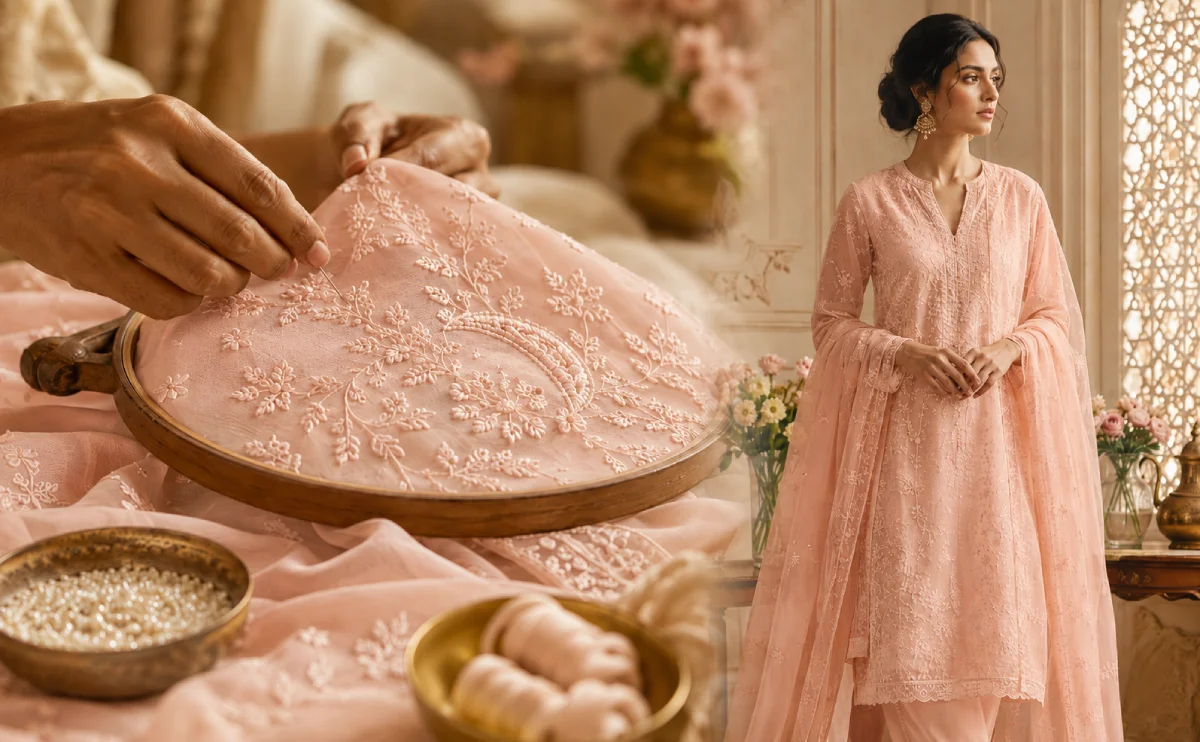
An authentic Lucknowi Chikankari piece is never simply made, it is built through a process of specialised craftsmanship that starts in Lucknow, at the hands of artisans who have inherited this skill through generations.
The journey begins with fabric selection. Muslin, cotton voile, georgette, Chanderi silk, organza, and fine cottons are chosen depending on the design and the fall required for a kurta, Anarkali, saree, gharara, palazzo set, or dupatta.
Then comes chhapai, the traditional block-printing stage. Hand-carved wooden blocks made from shisham wood are dipped into a temporary blue marking paste made with neel, water, and natural gum. These blocks are stamped onto the fabric to create the embroidery guide. This blue print shows the karigar exactly where each motif, floral pattern, border, or jaal must be embroidered.
From there, skilled artisans begin the real work. Different karigars specialise in different stitches and levels of chikankari. One may be known for perfect bakhiya and shadow work, another for fine jaali, while others focus on murri, phanda, tepchi, or keel kangan. This is not factory production. It is specialised hand embroidery that can take days, sometimes weeks, for a single piece.
Once complete, the fabric is carefully washed by specialist dhobis to remove the blue print marks, then finished, pressed, inspected, and tailored.
This is why authentic chikankari feels different. It carries not just design, but human skill, patience, and heritage.
At Fiza Chikan, every piece reflects this journey, because true luxury should be understood, not just worn.