


Blog
The Art Behind Every Chikankari Masterpiece

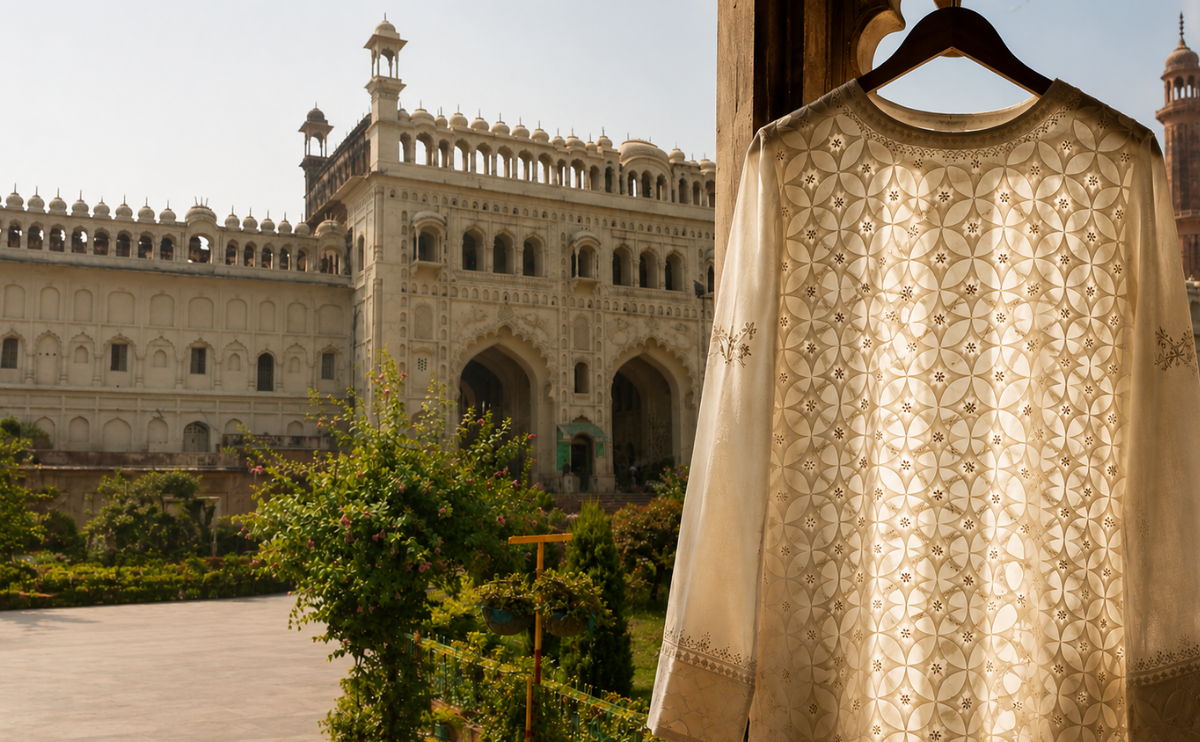
Behind Every Chikankari Masterpiece
Every authentic Lucknowi Chikankari kurti, Anarkali, suit, lehenga, saree, or dupatta carries a story of extraordinary craftsmanship. While the finished piece may appear effortlessly beautiful, the journey behind every hand-embroidered Chikankari masterpiece involves remarkable skill, patience, and generations of artistic knowledge.
For centuries, Lucknowi Chikankari has been celebrated as one of the finest forms of hand embroidery in the Indian subcontinent. Renowned for its delicate artistry, intricate detailing, and understated elegance, Chikankari continues to captivate people around the world. What many admire as a beautiful garment is, in reality, the result of a highly specialised process that combines design, craftsmanship, and heritage.
The process begins long before the first stitch is sewn.
Traditional Chikankari motifs are first carved onto wooden blocks by skilled craftsmen. These blocks are dipped into a washable pigment and carefully stamped onto the fabric, transferring intricate floral, paisley, vine, leaf, and jaal patterns that will later be embroidered entirely by hand. This stage requires remarkable precision, as the printed design serves as the guide for the embroidery that follows.
Only then does the true artistry begin.
Using specialised Chikankari stitches passed down through generations of artisans in Lucknow, embroiderers gradually bring each motif to life. Every flower, leaf, vine, and geometric pattern is created with precision, transforming plain fabric into a work of wearable art. Unlike machine embroidery, authentic Lucknowi Chikankari relies entirely on the skill of the artisan’s hands, making each piece unique.
Some of the most celebrated Lucknowi Chikankari stitches include:
Bakhiya (Shadow Work)
Often regarded as the signature stitch of Chikankari embroidery, Bakhiya creates the delicate shadow-like effect that makes authentic Lucknowi Chikankari instantly recognisable. Worked on the reverse side of the fabric, it produces a soft, translucent appearance that gives the embroidery remarkable depth and elegance.
Murri
A fine raised knot stitch resembling tiny grains of rice, traditionally used to highlight floral centres and intricate details. Murri adds texture and refinement to the overall design.
Phanda
A textured knot stitch that resembles millet seeds and contributes dimension and visual interest to embroidered motifs. It is frequently used in floral compositions and decorative detailing.
Jaali
One of the most admired Chikankari techniques, Jaali creates a delicate net-like effect without cutting or pulling the fabric threads. This highly specialised technique requires exceptional skill and patience, and is often regarded as one of the hallmarks of master craftsmanship.
Tepchi
A simple yet important running stitch used to outline motifs and create graceful flowing patterns throughout the embroidery. Though understated, Tepchi provides structure and definition to many designs.
These stitches are often combined with other traditional techniques such as Hool, Ghas Patti, Rahet, Pechni, and Keel Kangan, allowing artisans to create embroidery that is rich in texture, movement, and visual depth. Together, they form the artistic vocabulary that defines authentic Lucknowi Chikankari.
The complexity of a Chikankari design can vary significantly. Some garments feature delicate scattered motifs known as bootis, while others display elaborate all-over jaal patterns that cover large sections of fabric. Depending on the intricacy of the embroidery, a single Chikankari garment may require many hours—or even several days—of meticulous handwork. The finest pieces often pass through the hands of multiple artisans, each specialising in particular stitches and techniques.
The beauty of authentic Chikankari lies not only in its appearance but also in its versatility. Traditionally embroidered on fine cotton fabrics, Chikankari is now found on muslin, modal, chiffon, georgette, Chanderi silk, tissue silk, organza, crepe, and other luxurious textiles. Whether crafted as a kurti, kurta set, Anarkali, saree, lehenga, dupatta, or contemporary ensemble, the embroidery retains its distinctive elegance and handcrafted charm.
This dedication to craftsmanship is what has made Lucknowi Chikankari one of the most treasured embroidery traditions of the Indian subcontinent. For generations, artisans have preserved and refined these techniques, ensuring that the art continues to thrive in a rapidly changing world.
When you wear authentic Lucknowi Chikankari, you are not simply wearing clothing. You are wearing a living heritage of artistry, craftsmanship, and tradition—preserved and perfected across generations of skilled artisans.
At Fiza Chikan Dubai, we celebrate this remarkable heritage by bringing carefully selected hand-embroidered Lucknowi Chikankari kurtis, Anarkalis, suits, sarees, lehengas, dupattas, and contemporary silhouettes to women who appreciate authentic craftsmanship and timeless design. Every piece reflects the artistry of skilled hands and the enduring legacy of one of the world’s most admired embroidery traditions.