


Why Chikankari Is Known as the Art of Shadow Work

Why Chikankari Is Known as the Art of Shadow Work
Why Chikankari Is Known as the Art of Shadow Work
Why Chikankari Is Known as the Art of Shadow Work
Why Chikankari Is Known as the Art of Shadow Work
Among the world’s embroidery traditions, Lucknowi Chikankari holds a unique distinction. It is often called “Shadow Work.”
But what exactly creates this beautiful effect?
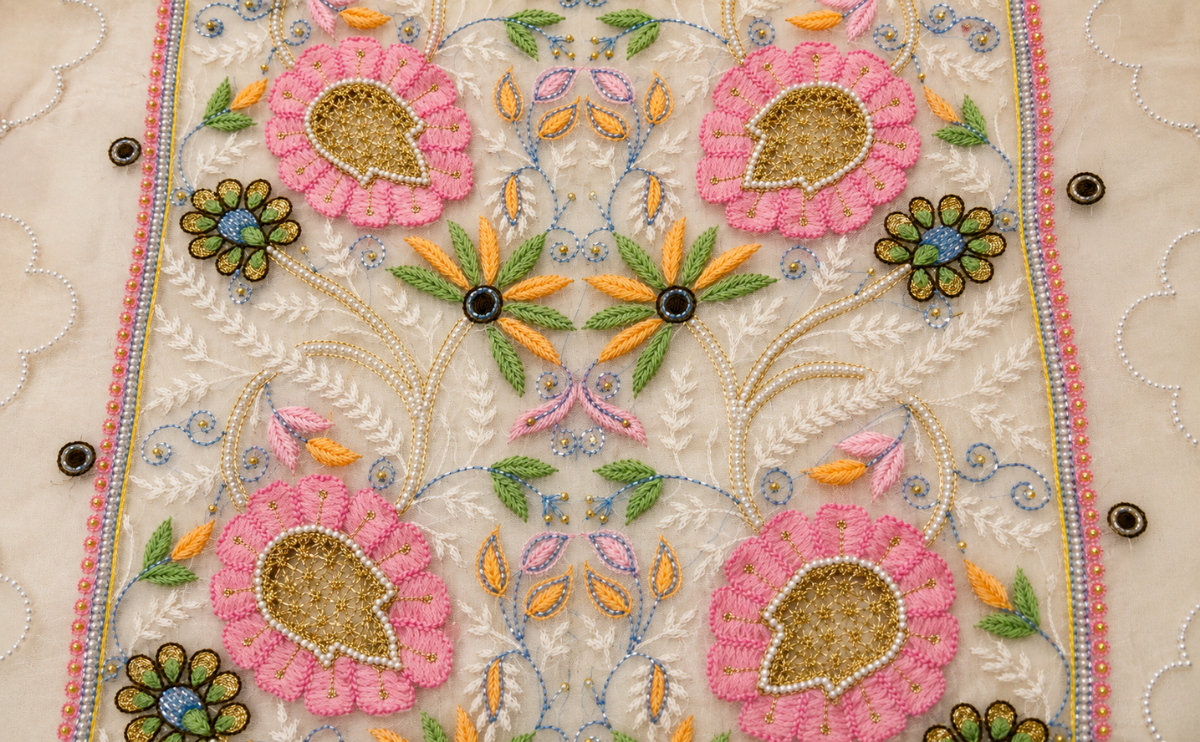
Traditional Chikankari was embroidered using white cotton thread on fine white muslin. Certain stitches, particularly Bakhiya, are worked from the reverse side of the fabric. When viewed from the front, the embroidery appears soft and translucent, creating a subtle shadow beneath the surface.
This delicate play of light and texture gives Chikankari its signature elegance.
Unlike heavily embellished embroidery that demands attention, Chikankari whispers rather than shouts. Its beauty lies in restraint, precision, and craftsmanship.
The shadow effect becomes even more striking on lightweight fabrics such as:
- Muslin
- Mulmul
- Cotton Voile
- Chiffon
- Georgette
- Organza
- Chanderi
The result is an embroidery style that feels effortless, feminine, and timeless.
This is one of the reasons authentic hand-embroidered Chikankari continues to be cherished generations after its creation.